Best First Guitar Amp Under $200 (Owner Picks)
“What’s the best first amp under $200?” is one of the most common beginner questions in English-speaking forums — and the answers have never been better. Modern budget amps pack modeling, effects, headphone outputs and USB recording into a bedroom-friendly box. Here’s an honest round-up of what owners and teachers actually recommend.
Where these takes come from
A synthesis of recurring recommendations from English-speaking communities (r/Guitar, Ultimate Guitar) and teachers, focused on real first-amp needs rather than spec sheets. (Prices move and vary by region — treat figures as ballpark, and watch for sales.)
What to prioritize in a first amp
- Sounds good at low volume — you’ll mostly play quietly at home.
- Headphone output — essential for apartments and late-night practice.
- Built-in effects / amp models — explore tones without buying pedals.
- USB / app — for recording and play-along practice.
The picks owners recommend (around/under $200)
Fender Mustang LT25 — the value benchmark
Constantly recommended: a stack of amp models and effects, presets, USB recording, and a friendly interface — for one of the lowest prices in the category. A top “do-it-all” first amp.
Boss Katana (Mini, or 50 on sale)
The Katana name dominates amp threads. The tiny Katana Mini is a cheap, fun practice option; the Katana-50 sometimes dips near this budget on sale and is the long-term winner if you can stretch — see our Katana owner reviews.
Blackstar Debut / ID:Core
Loved for bedroom use: stereo sound, useful voicings, headphone out, and strong value. A favorite “small but punches up” recommendation.
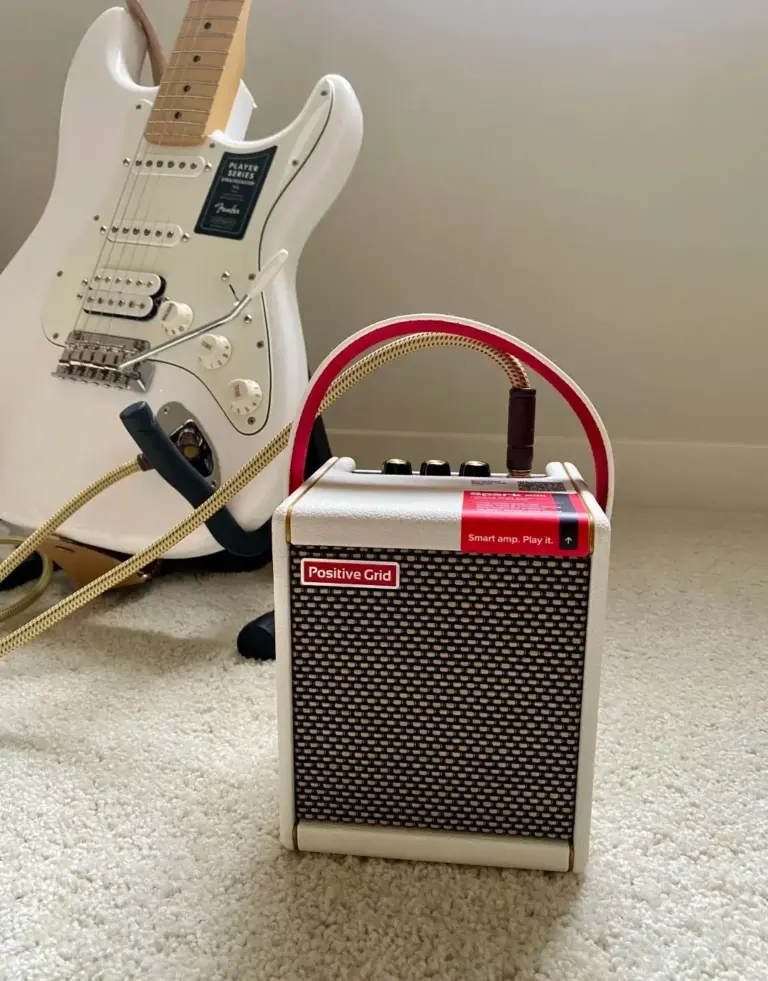
Positive Grid Spark Mini
A compact, app-driven amp with great tones and play-along features — ideal for desk/sofa practice (often hovering just around this budget).
Orange Crush 20 — for plug-and-play rock
No menus, no app — just a genuinely good rock tone and simple controls. The pick for players who want to plug in and play.
What owners flag
1. A $200 amp is a home amp
The recurring reality check: these won’t keep up with a drummer. For a band you’ll need more power later — see our home practice amp guide.
2. Modeling amps need a little setup
Presets are often too bright or too effected; spend a few minutes dialing in your own and they shine.
3. You may not need pedals yet
Most of these include effects, so hold off on a pedalboard while you learn.
The under-$200 contenders, side by side
Here’s how the amps above (plus a couple of no-frills classics that still get recommended) stack up. Price ranges are what I observed in 2026 across US and European retailers; they swing a lot with sales, so check current listings.
| Amp | Best for | Strengths | Weaknesses | Price range observed 2026 |
|---|---|---|---|---|
| Fender Mustang LT25 | The all-round first amp | Many amp models and effects, presets, USB recording, easy screen | Small speaker, bedroom only, presets need tidying | Roughly $130–$180 |
| Boss Katana Mini | Desk and travel practice | Tiny, battery-powered, honest rock tones, headphone out | No software, no USB, three voicings only | Roughly $90–$130 |
| Boss Katana-50 (on sale) | Stretching once and never upgrading | Rehearsal-capable, Tone Studio, USB, huge range | Usually over budget at full price, deeper menus | Roughly $250–$350 (dips lower on sale) |
| Blackstar Debut 15E | The cheapest “sounds good” option | Simple two-channel layout, tape-style delay, headphone out | No modeling, no USB, basic feature set | Roughly $90–$140 |
| Blackstar ID:Core 10 / 20 | Stereo bedroom tones on a budget | Stereo speakers, several voicings, effects, USB on the current versions | Small speakers, app needed for deep editing | Roughly $120–$200 |
| Positive Grid Spark Mini | App-based play-along practice | Excellent app, Bluetooth speaker, backing tracks, battery | Depends on the app, quiet, often just over $200 | Roughly $180–$250 |
| Orange Crush 20 | Plug in and play rock | Two channels, great drive, no menus, headphone out with cab sim | No effects beyond the RT reverb version, no USB | Roughly $150–$200 |
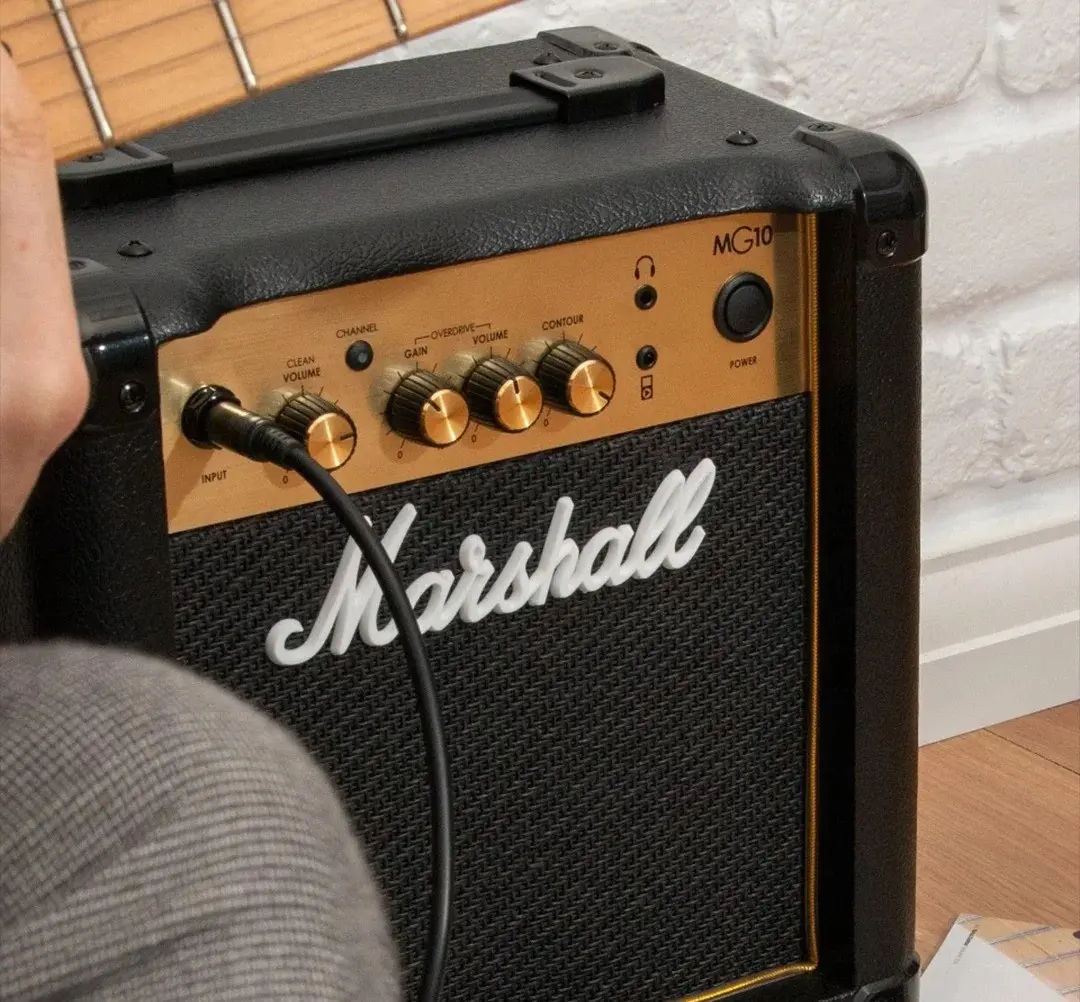
| Marshall MG10 / MG15 | Classic Marshall look on a tight budget | Simple, sturdy, decent crunch, headphone out | Limited clean tone, no modeling or recording features | Roughly $90–$160 |
This page contains affiliate links. If you buy through them, we may earn a commission at no extra cost to you.
New or used at this budget
The question comes up in almost every first-amp thread, and the honest answer is that $200 goes a long way second-hand. Practice amps are rarely abused, they have no tubes to wear out, and a lot of them are sold by people who quit after six months. A used Katana-50 or a Mustang LT25 in good shape can land comfortably inside this budget, and either is a better long-term amp than most new amps at the same price.
What I check on a used practice amp
- Every knob and switch works without crackling — scratchy pots are a small job on a big amp but a deal-breaker on a cheap one.
- The headphone and aux sockets function; these fail first on amps that lived on a desk.
- No rattle from the speaker on a low, clean note.
- For modeling amps: the USB port is recognised by a computer and the software for that exact model is still downloadable.
When new makes more sense
If you’re buying online without being able to test, or if the used price is within about a fifth of new, take the warranty. Beginners rarely have the experience to diagnose a faulty amp, and a return policy is worth real money in that situation.
What to plug in with it (and what’s pointless)
A first amp needs very little around it. What genuinely helps, based on what owners keep recommending and what I use myself:
- Closed-back headphones — the single most-used accessory for anyone in a flat or a shared house.
- A decent instrument cable — a crackling cheap cable is the number-one reason beginners think their new amp is broken.
- A clip-on tuner if your amp doesn’t have one built in (the Mustang LT25 does; the plain Crush 20 and the Debut don’t, so check the spec sheet of whatever you pick).
- A USB cable for the amps that record — the LT25 and Katana-50 turn into audio interfaces with nothing else added.
What’s pointless at first: a pedalboard, a bigger speaker cabinet, and any “tone upgrade” gadget. The modeling amps already have more effects than you’ll use in the first year, and a simple amp like the Crush benefits far more from a single overdrive pedal down the line than from a rack of effects now. My full list of what’s worth buying early is in essential accessories for beginners.
Mistakes to avoid when buying a first amp
Buying for the band you don’t have yet
A 100-watt half-stack in a bedroom is the classic regret. It sounds bad quietly, it’s impossible to live with, and it delays the day you sound good. Buy for the room you practise in now; upgrade when rehearsals are actually on the calendar.
Judging the amp on the stock presets
The Mustang and Katana both ship with patches drenched in effects. Every forum thread says the same thing: pick a clean or crunch preset, turn the reverb and delay down, and only then decide whether you like the amp.
Skipping the headphone output to save $20
Some very cheap amps still don’t have one. If you live with anyone, this is the feature you’ll use most, and its absence is the fastest way to stop practising.
Ignoring the guitar
A $200 amp can’t fix a guitar that won’t stay in tune or has action so high it hurts. If you’re building your first rig from scratch, read how to choose your first electric guitar first, and budget for a setup — a well-adjusted guitar through a cheap amp beats the reverse every time.
Before you order: the checklist
- Where will it live? Desk or shelf: Katana Mini, Spark Mini, Debut. Floor of a bedroom: Mustang LT25, ID:Core, Crush 20, Katana-50.
- Menus or knobs? If you’d rather not touch an app, choose the Crush 20 or Debut. If you enjoy exploring, the LT25 or Katana.
- Do you want to record? Then USB matters: LT25, Katana-50, current ID:Core. The Crush, Debut and Katana Mini don’t offer it.
- Check the sale calendar. The Katana-50 and LT25 are discounted several times a year; that’s when the “50 on sale” advice makes sense.
- Read the return policy. Give yourself a week of real practice before judging any amp.
Still hesitating between the two biggest names? The Katana vs Mustang vs Spark comparison goes model by model.
My honest take
For most beginners, the Fender Mustang LT25 or a Boss Katana (Mini now, or a 50 on sale) is the smart buy: versatile, headphone-equipped, and recording-ready. Prefer simple plug-and-play rock? The Orange Crush 20. On a tight budget? Blackstar Debut/ID:Core. Pair it with a reliable guitar — see our best electrics under $500.
Riffbound verdict
Who it’s for: a beginner practising at home who wants effects, a headphone output and USB recording without spending more than $200 — the Fender Mustang LT25 is the default answer, with the Katana-50 on sale as the “buy once” upgrade.
Who should skip it: anyone already rehearsing with a drummer (nothing here is loud enough), and players who know they hate menus — for them the Orange Crush 20 is the better buy, even though it does less.
The alternative worth a look: if you’ll only ever play at a desk with headphones, a small modeling amp may be more than you need; our home practice amp guide covers headphone amps and interfaces too.
Based on owner and teacher feedback, no paid testing. How we review.
FAQ
What’s the best first amp under $200?
The Fender Mustang LT25 and Boss Katana line are the most-recommended for versatility; Orange Crush 20 for simple rock; Blackstar for value.
Modeling amp or simple amp?
Modeling for most beginners — effects and amp models let you explore styles. Choose simple if you only want one good tone with zero menus.
Do I need a headphone output?
For apartment practice, yes — it’s one of the most useful features at this price.
Is a $200 amp enough to play in a band?
No — these are home amps. You’ll want a more powerful amp (or a gig-capable Katana-50/100) once you start rehearsing with others.
Should I buy a used amp for my first one?
It’s a good way to get a Katana-50 or Mustang LT25 inside the budget. Test every knob and socket, make sure the software is still available for that model, and prefer new if the saving is small or you can’t try it before paying.
Is it worth waiting to save for a bigger amp?
Usually not. A bigger amp sounds worse at bedroom volume and doesn’t help you learn. Buy a good small amp now, practise, and upgrade only when you actually need the volume.
Sources and method
This synthesis is based on owner and teacher feedback read on the following communities (consulted in 2026), with model names and features checked against the manufacturers’ official pages:
- r/Guitar (owner feedback, very high volume)
- Ultimate Guitar (reviews and forums)
- Manufacturers’ official spec sheets (fender.com, boss.info, positivegrid.com, blackstaramps.com, orangeamps.com, marshall.com)
We receive no free gear and no brand reads our articles. Merchant links are affiliate links: how we work.