Boss Katana: Why Forums Call It the Best Practice Amp
If there’s one amp the English-speaking guitar community recommends more than any other to beginners and home players, it’s the Boss Katana. It shows up in nearly every “best practice amp” thread. But does it deserve the hype? Here’s an honest round-up of what owners actually report — the strengths and the gripes.
Where these takes come from
A synthesis of recurring opinions from English-speaking communities (r/Guitar, The Gear Page, Ultimate Guitar) and home-recording players, focused on real-world use: practice, recording and the occasional rehearsal.
What owners love
Huge versatility for the money
Five amp voicings plus a deep stack of built-in effects mean most players find their sound without buying pedals. For exploring styles on a budget, owners call it unbeatable.
It scales from bedroom to stage
The 50 and 100-watt versions have the headroom to keep up with a drummer, while the smaller models shine at home. One amp, many situations — a recurring selling point.
Tone Studio software
The free editor lets you tweak deeply and load community tones. Owners who dig in say it unlocks a lot more than the front panel suggests.
It just works (and lasts)
Reliability and build quality come up constantly. It’s the “buy it and forget it” recommendation.
What owners flag
1. The “feel” vs a real tube amp
The deepest criticism: at high volume, some players still prefer the dynamic response of a tube amp. It’s subjective, but it’s why a few move on for serious stage use.
2. You’ll want the software to get the most out of it
Plenty of tones live in Tone Studio rather than on the panel. Players who just want “plug in and go” can find it a bit deep.
3. Stock presets need work
Factory patches are often too bright or too effected. Most owners spend time dialing in their own — and then love it.
4. The smaller models won’t gig
The Mini and lower-watt versions are home amps. For a band, you need the 50 or 100. See our amps explained guide.
The Katana range and its rivals, side by side
Before the merchant button, here is the comparison I wish someone had shown me before I bought my first modeling amp. Prices are wide ranges observed in 2026 and move constantly with sales — check current listings before you decide anything.
| Amp | Best for | Strengths | Weaknesses | Price range observed 2026 |
|---|---|---|---|---|
| Boss Katana-50 (MkII / Gen 3) | The one-amp-for-everything buyer | Five voicings, deep effects, Tone Studio, loud enough to rehearse, USB recording | Presets need work, some menu-diving, heavier than a desktop amp | Roughly $250–$350 |
| Boss Katana-100 (MkII / Gen 3) | Players who already gig or rehearse with a drummer | Real stage headroom, same feature set as the 50 | Overkill for a bedroom, bigger and heavier | Roughly $350–$500 |
| Boss Katana Mini | Desk, travel, battery practice | Tiny, runs on batteries, surprisingly usable tones | No software editing, no USB, home use only | Roughly $90–$130 |
| Boss Katana:Go | Headphone-first, silent practice | Pocket-sized, app control, plugs straight into the guitar | Not a room amp at all, headphones or interface only | Roughly $110–$150 |
| Fender Mustang LT25 | Cheapest full-featured first amp | Lots of models and effects, simple screen, USB | Small speaker, won’t leave the bedroom | Roughly $130–$180 |
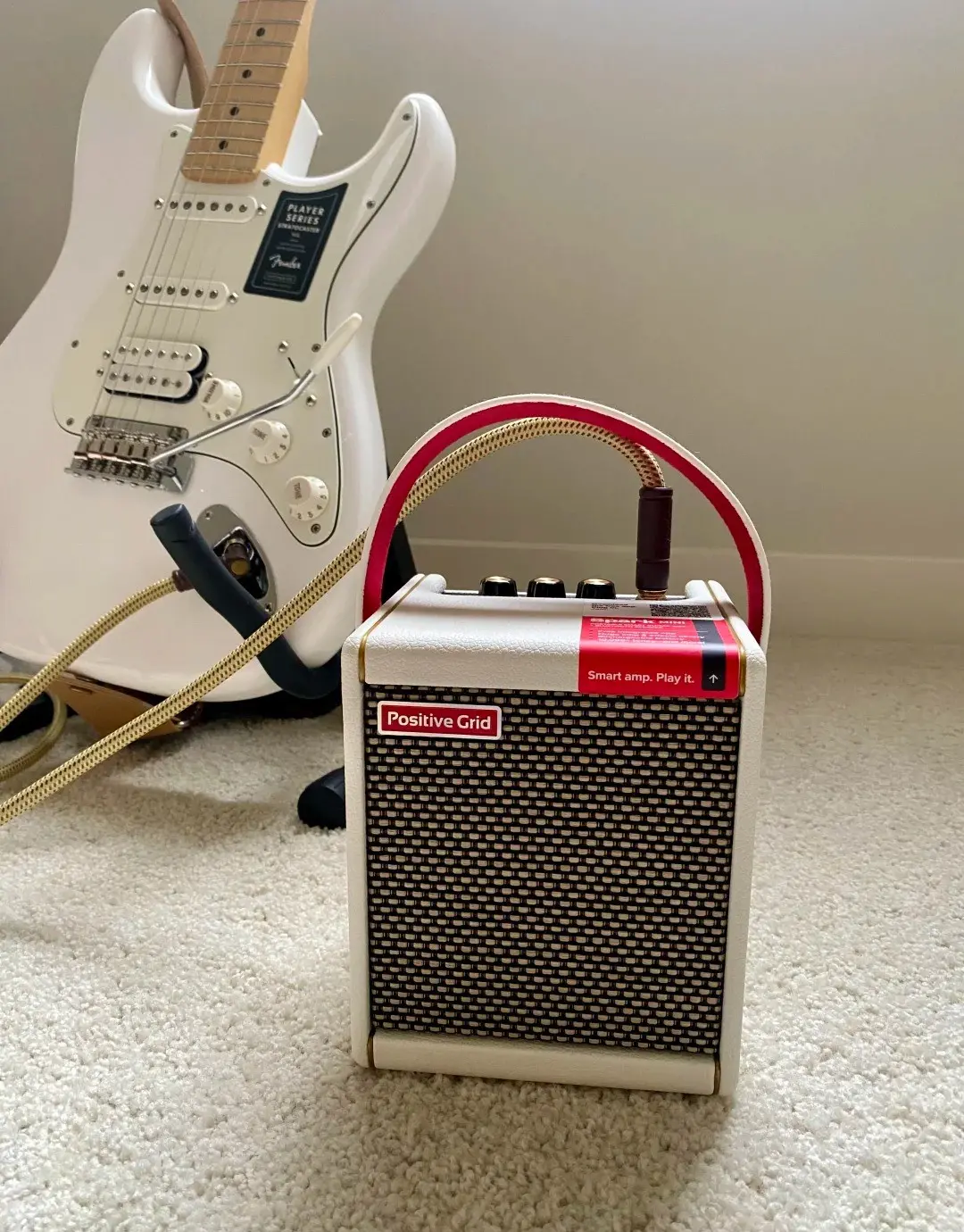
| Positive Grid Spark 40 | App-driven play-along practice | Excellent app, Bluetooth, backing-track features | App dependence, not a rehearsal amp | Roughly $250–$350 |
| Yamaha THR10II | Desktop tone purists | Beautiful low-volume sound, stereo, looks great on a desk | Pricier, fewer effects, strictly home volume | Roughly $300–$400 |
This page contains affiliate links. If you buy through them, we may earn a commission at no extra cost to you.
The Katana lineup: which size to buy
One of the most common questions in Katana threads is simply which version to get, and the community answer depends entirely on where you’ll use it. The Katana Mini and the smaller-watt models are, by broad agreement, home and travel amps — great for quiet practice but not built to keep up with a band. The 50-watt version is the one owners most often recommend as the do-it-all choice: loud enough to rehearse and even gig with a drummer, yet still usable at home. The 100-watt models and cabinets are aimed at players who need stage volume and headroom.
The repeated advice is to buy for your loudest realistic need, since a 50-watt Katana can be turned down for the bedroom but a Mini can’t be turned up for a band. For most players weighing up the range, the 50 is the version that comes up again and again as the safe, flexible pick.
Getting past the stock presets
A criticism that surfaces constantly is that the factory patches don’t flatter the amp — owners describe them as too bright, too effected, or simply not representative of what the Katana can do. The community’s consistent response is that this is a first-impression problem, not a real weakness. Players who spend a little time dialing in their own sounds, or loading tones through the free Tone Studio editor, almost universally report that the amp then “clicks.” The advice repeated in thread after thread is to reserve judgement until you’ve either tweaked the presets yourself or imported some community patches.
This is worth knowing before you buy: the Katana rewards a bit of setup effort. If you want a pure plug-in-and-go experience with no menus, the depth can feel like a hurdle — but the payoff, owners say, is a genuinely huge range of usable tones.
Katana versus the other usual suspects
When the community compares the Katana with other popular practice amps, the recurring conclusion is that it wins on versatility and value rather than on any single tone. Against smaller modeling and solid-state practice amps, owners point to the Katana’s deeper effects, editing software and ability to scale up to gig volume. The main scenario where players suggest looking elsewhere is when someone specifically wants the feel and simplicity of a small tube amp for a very particular vintage tone. For the broad goal of one affordable amp that covers many styles at home and beyond, the Katana is the recommendation that keeps returning. If you’re torn between the three big names, I go deeper in Katana vs Mustang vs Spark.
Modeling vs tube: what the community says
For home practice and versatility, the consensus is that a good modeling amp like the Katana is the smartest, most affordable choice. Tube amps keep the edge for feel and “purist” stage tone — see our best amps for home practice.
New or used: is a second-hand Katana a smart buy?
Because Boss has sold so many Katanas, the used market is full of them, and the forums are generally relaxed about buying one second-hand. The reasons are simple: there are no tubes to wear out, the chassis is tough, and the firmware can be updated at home. The things I’d actually check are boring ones — every knob turns without crackle, the headphone and USB sockets work, the speaker doesn’t rattle on a low clean note, and the amp powers up without a hum that changes when you touch the guitar.
MkII or the current generation?
Owners who upgraded from the original Katana to the MkII, and then to the current generation, mostly describe incremental gains rather than a night-and-day difference. That’s good news if you’re buying used: a clean MkII 50 at a saving of a good chunk of the new price is a very sensible purchase, and the tone-editing workflow is close enough that community advice still applies. The one caveat is software support — check that the editor version for your exact model is still downloadable from Boss before paying.
When new is worth it
A new Katana comes with a warranty and the latest firmware out of the box, and Katana sales are frequent enough that the gap to a used price can shrink to very little. If the difference is small, I’d take new. If the seller is asking close to retail for a used one, walk away — that’s the recurring advice, and it’s right.
What to plug in with it (and what’s pointless)
The Katana is designed to be the whole rig, so the accessory list is short. What actually helps, based on what I use and what owners keep recommending:
- Closed-back headphones for late practice — the phones/rec output is one of the amp’s most-used features.
- A USB cable and a free recording app. The 50 and 100 double as an audio interface, so you can record ideas without extra hardware.
- A footswitch (the Boss GA-FC or a basic dual switch) if you play with a band and need to jump between channels hands-free.
- A decent instrument cable — cheap ones crackle and it’s maddening to troubleshoot an amp that’s actually fine.
What’s pointless, at least at first: a pedalboard. The built-in drives, delays and reverbs cover the ground most beginners need, and stacking a multi-effects unit in front of a modeling amp usually makes things muddier, not better. If you really want pedals later, start with a single overdrive and use the amp’s clean voicing. For a wider look at what’s genuinely worth buying early on, see essential accessories for beginners, and if you’re curious about the multi-effects route instead, this guide explains when it makes more sense than an amp with everything built in.
Before you order: the checklist
- Room or band? Bedroom only: Mini, Katana:Go or a 50 turned down. Rehearsals: 50 minimum. Gigs with a loud drummer: 100.
- Do you want to tweak? If menus put you off, be honest — the Katana rewards tinkering. A simpler amp might suit you better, as my first amp under $200 round-up shows.
- Check the generation in the listing (original, MkII, current) and make sure the software matches.
- Look at the sale calendar. The 50 drops in price regularly; buying full price the week before a sale is the most common regret in the threads.
- Return policy. Give yourself two weeks with the editor before deciding. First impressions of the stock presets are rarely the amp’s best side.
My honest take
The Katana earns its reputation: it’s the best all-round practice amp for most players, with real versatility and rock-solid reliability. Its limits — tube “feel,” some menu-diving, gig-ready only in the bigger versions — are minor for the majority.
Riffbound verdict
Who it’s for: anyone who wants one affordable amp that covers many styles, records over USB and can grow from bedroom to rehearsal room. The Katana-50 is the version to get if you can only buy once.
Who should skip it: players who want zero menus and a single great tone, or who already know they want the feel of a small tube amp. The depth that owners love is exactly what frustrates them.
The alternative worth a look: the Fender Mustang LT25 if your budget is tight and you’ll never leave the bedroom, or the Yamaha THR10II for a desktop amp that sounds gorgeous quietly — compared in detail in Katana vs Mustang vs Spark.
Based on owner and teacher feedback, no paid testing. How we review.
FAQ
Is the Boss Katana a good first amp?
It’s one of the safest picks: versatile, reliable, and available in sizes for home or band use.
Modeling or tube to start?
Modeling, in most cases: more versatile, more practical at home, and cheaper. Tube can come later if you want it.
Can you gig with a Katana?
Yes, with the 50 or 100-watt model. The Mini and small versions are for home.
Do I need the app?
Not to play, but Tone Studio unlocks the full potential. You can start without it and explore later.
Does the Katana have a headphone output?
Yes — the 50 and 100 have a phones/rec output that mutes the speaker, and the Mini has a headphone socket too. The Katana:Go is built around headphones from the start. It’s one of the reasons apartment players rate the range so highly.
Can I record with a Katana without an audio interface?
With the 50 and 100, yes: the USB port sends audio to a computer, so a free recording app is all you need to capture ideas. The Mini has no USB, so for that model you’d use the headphone output into an interface or phone adapter.
Sources and method
This synthesis is based on owner and teacher feedback read on the following communities (consulted in 2026), cross-checked against Boss’s official product pages for model names and feature lists:
- r/Guitar (owner feedback, very high volume)
- Ultimate Guitar (reviews and forums)
- The Gear Page (in-depth gear discussion)
- Manufacturers’ official spec sheets (boss.info, fender.com, positivegrid.com, yamaha.com)
We receive no free gear and no brand reads our articles. Merchant links are affiliate links: how we work.